Margin Call has been sitting on my “watch list” for sometime having previously dismissed it as the usual business movie. Easter break provided a natural opportunity to catch up with it, and aren't I glad that I did!
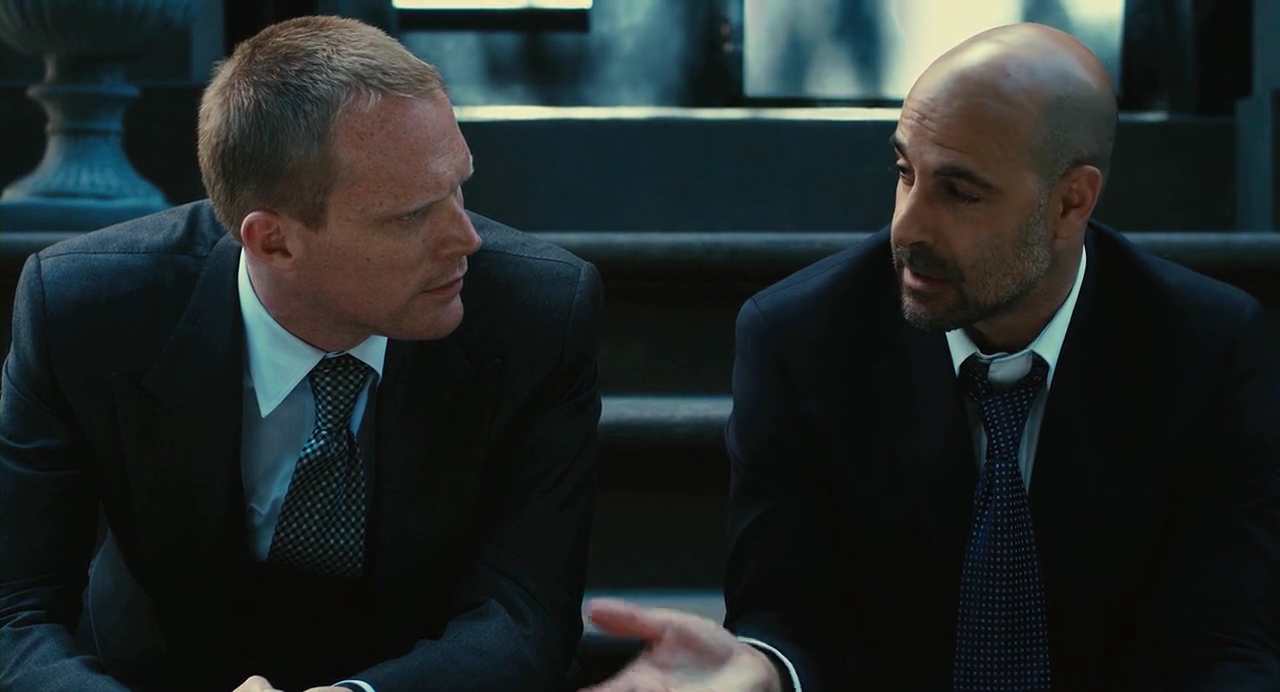
The film is set during the 2008 credit crisis when financial engineering (and greed) reaped the whirlwind which left many financial traders out of work. It tells the story of a respected financial firm that is downsizing its trading floor department. In the melee it is discovered that the firm is on the brink of collapse.
What follows is a long night of panic, double checking and double dealing as the senior management prepare to do whatever it takes to mitigate the debacle. At the heart of the drama are the difficult practical and moral decisions that must be made. Will the firm dump its toxic assets on the market causing irreparable damage to the industry and its relationships? Will the demotivated traders perform? Who must carry the can for this mess?
The movie is beautifully crafted and fast paced. All the events take place in less than 48 hours. The acting is strong with superb performances from established and less known faces alike. Any film with Stanley Tucci and Jeremy Irons is worth watching. Kevin Spacey is majestic in his role as Sam Bowers the head of trading. But it is senior trader Will Emerson (Paul Bettany) who certainly steals the show with some amazing lines that give us a window into the personal philosophy of financial traders.
What makes this movie very special is its multifaceted realism. It is realistic in its portrayal of the industry. It confronts us with people who earn huge sums of money for merely punching numbers into complex models that even they do not understand. An auto-pilot industry run by clueless CEOs who are not ashamed to say : the only thing necessary for career advancement is either be first or be smart or cheat.
It is also realistic in its portrayal of the economic challenge nationally as government's grapple with regulating this industry. One of the most interesting issues raised by the film is how the market “misallocates” national talent in the long term. That brightest people in the movie Eric and Peter seem to be the only ones who understand the whole thing! These expert brought in to punch the numbers all have the background in the physical sciences and mathematics.
And such is the case in practice! Many of the investment banks now only hire people with PhD to do financial engineering! The Erics who should be building bridges. The question therefore must be asked whether financial engineering is the best use of their talent. Market economics answers the “market is always right”! But what’s good for the market may not be good for society in the long term! In particular as the CEO notes inequalities always remain and the overall potential size of national income is diminished. But also because market choices are not morally neutral.
The film is most realistic in its portrayal of the human condition. We are offered different vantage points through the main characters to not only enable us to understand what is happening but also to help us grapple with the moral choices being made. The film never draws conclusions for us, rather it draws us to see the industry for what it is and forces us to draw conclusions on our own. Its aim is to present man in all his complexity - and it succeeds to the extent that is possible within a 107 minutes!
There are no simple straw men here. Early on we are presented the gut wrenching job termination of Eric, whose end appears to have been partly masterminded by the woman he been having adultery with. We are immediately conflicted. Is this justice being done? Or should we feel sorry for him at the brutality of his company? That could be me being fired, we wonder! But even as we ponder and partly dismiss him as a man who earns enough and mindlessly spends it on strip clubs, we can’t help to notice that he really does care for the company and its staff hence the reason he put in effort to understand its impending disaster. Are we to sympathise with him or turn away ashamed?
Similar issues arise when we turn to Sam Bowers. We are appalled that he can get 20% of his staff to clap for themselves for not being fired when many of their friends have lost jobs. Who is this man who can weep for his dog dying but not the job losses of his people? But as the story evolves we see that Sam does have some semblance of humanity and care for people. Thirty years of cut throat trading have not quite suppressed his knowledge of good. Perhaps he is a man to pitied rather than totally shunned. In the end he too is a victim.
In presenting man as complicated, the producers are careful not to leave us bereft of moral conclusions. For example, the film is unwavering in its portrayal of the human cost of chasing money. A dominant theme of the drama is that love of money only brings loneliness. It leaves people with a dog as their only true friend and young traders in toilets sobbing with no shoulder to lean on.
And lest we are tempted to dismiss the seductive power of money as one which betrays only the intellectually weak, the film reminds us pointedly to the contrary. One of the saddest moments in the film is when the brightest person Peter (dubbed “rocket scientist”) who seems early on to be a voice of moral innocence in the end follows the money (as he gets promoted) despite the cut throat observations he has already seen. He has seen the cost of following money and yet he embraces it.
One would have thought a chap that smart would realise that the money is not worth it in the long term. But it goes to show all of us that brains are not sufficient to make accurate moral choices. There’s something corrosive in the human heart that makes us servants to the love of money. The Bible calls it sinful nature. We are people in need of rescue from ourselves. And that of course is the message of Easter! So perhaps it was appropriate I watched this movie during Easter and was reminded that we do indeed need the rescue of the Cross of Jesus!
Many people will be offended by a lot of swearing in the movie, but this appears to be one of those rare times when “in character” swearing adds to the movie rather than subtract from it*. It’s certainly a movie worth watching and reflecting on!
*John Frame’s Doctrine of the Christian Life has a good section on how Christians should approach swearing in film and drama.
Copyright © Chola Mukanga 2013
Comments
Post a Comment